
Noise, the first barrier
to learning
Schools, nurseries, canteens, libraries: high ceilings, hard floors, high-pitched voices. Reverberation wears out children and staff alike, and regulations here are stricter than elsewhere.
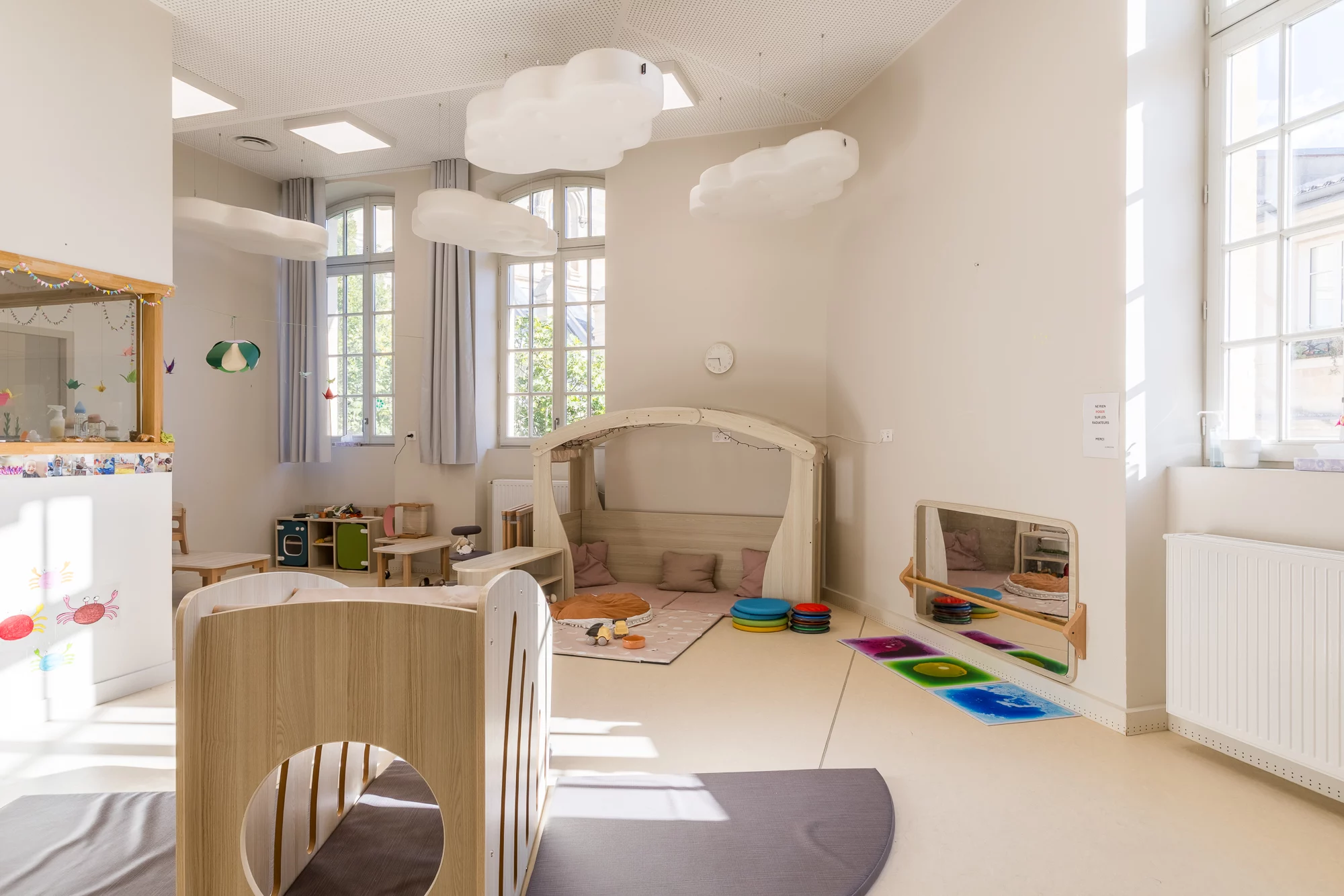
In a classroom with too much reverberation, a child sitting at the back loses nearly one word in three. It's not a comfort problem, it's a learning problem.
Three reasons to act
Intelligibility first
Under 0,6 s of reverberation, the teacher's voice stays clear from the front row to the back. Beyond 1 s, everyone raises their voice and the room's noise level climbs on its own.
Staff fatigue
A nursery staff member can be exposed to up to 85 dB continuously over a canteen day. That's the threshold at which French labor law requires preventive action.
Enforceable thresholds
The French decree of 25 April 2003 sets minimum absorption areas by type of school premises. Our before-and-after measurements serve as supporting evidence.
Before, after, measured
180 m² hall, tiled floor, concrete ceiling. 14 hanging clouds.
Before, after
Reverberation time according to the Sabine model. Results vary with volume, materials and use; validated on site by before / after measurement.
What French regulations require
- Classroom (decree of 25/04/2003)
- TR ≈ 0,4 to 0,8 s depending on room volume
- Nursery activity room
- TR ≈ 0,4 to 0,6 s
- School catering, canteen
- Absorption area ≥ 25 % of floor surface
- Normative reference
- Decree of 25 April 2003
Comparable
spaces
Every project starts with a measurement and ends with another.
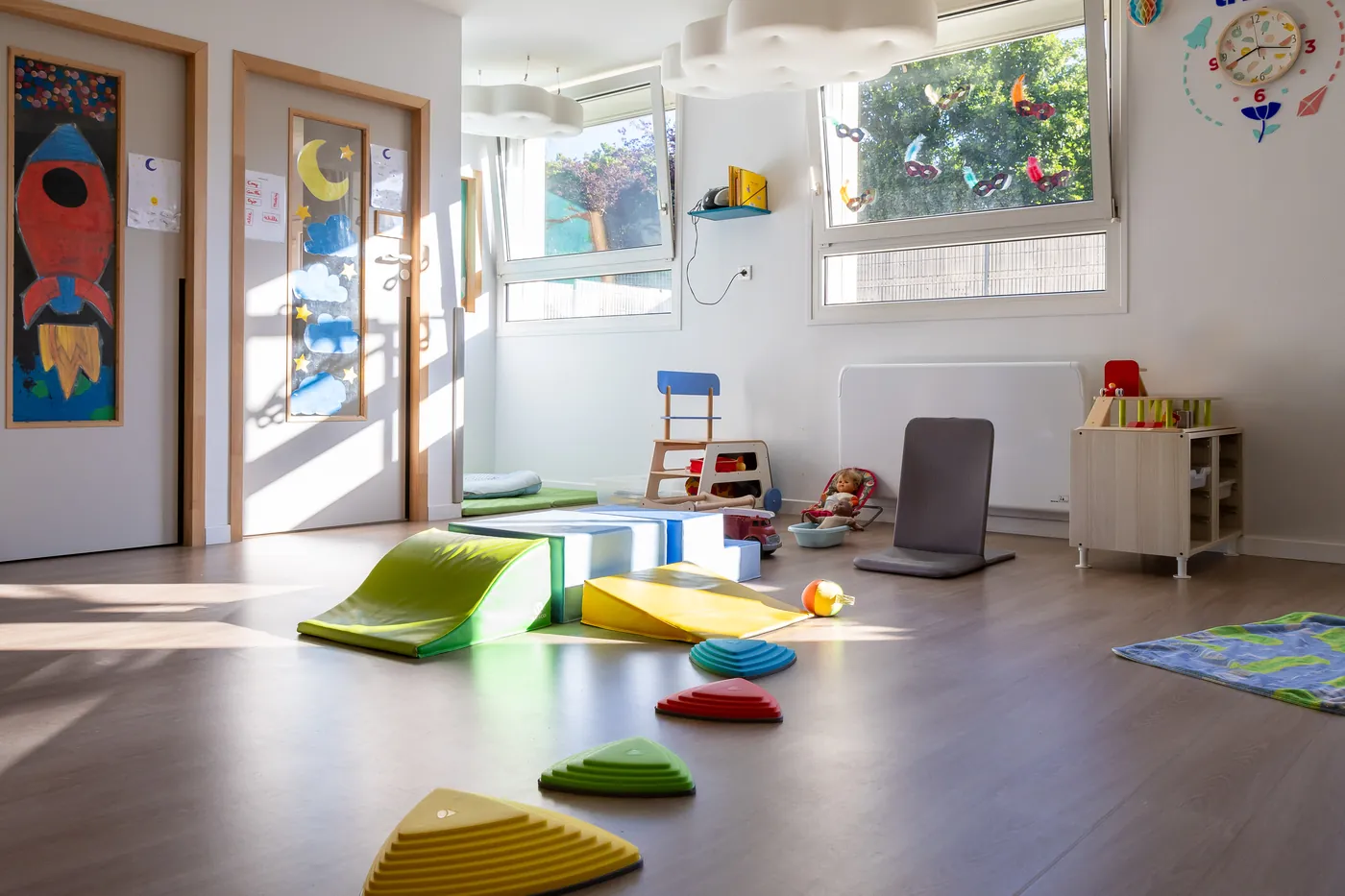
A building that needs treatment?
We measure on site before sizing the installation, then we return to measure after installation.
Request an acoustic survey