
Calm,
first service provided to the user
Town halls, departments, regions, university hospitals: high-ceilinged halls, tiled floors, impatient queues. Reverberation harms the confidentiality of exchanges and exhausts reception staff, exposed to noise all day long.
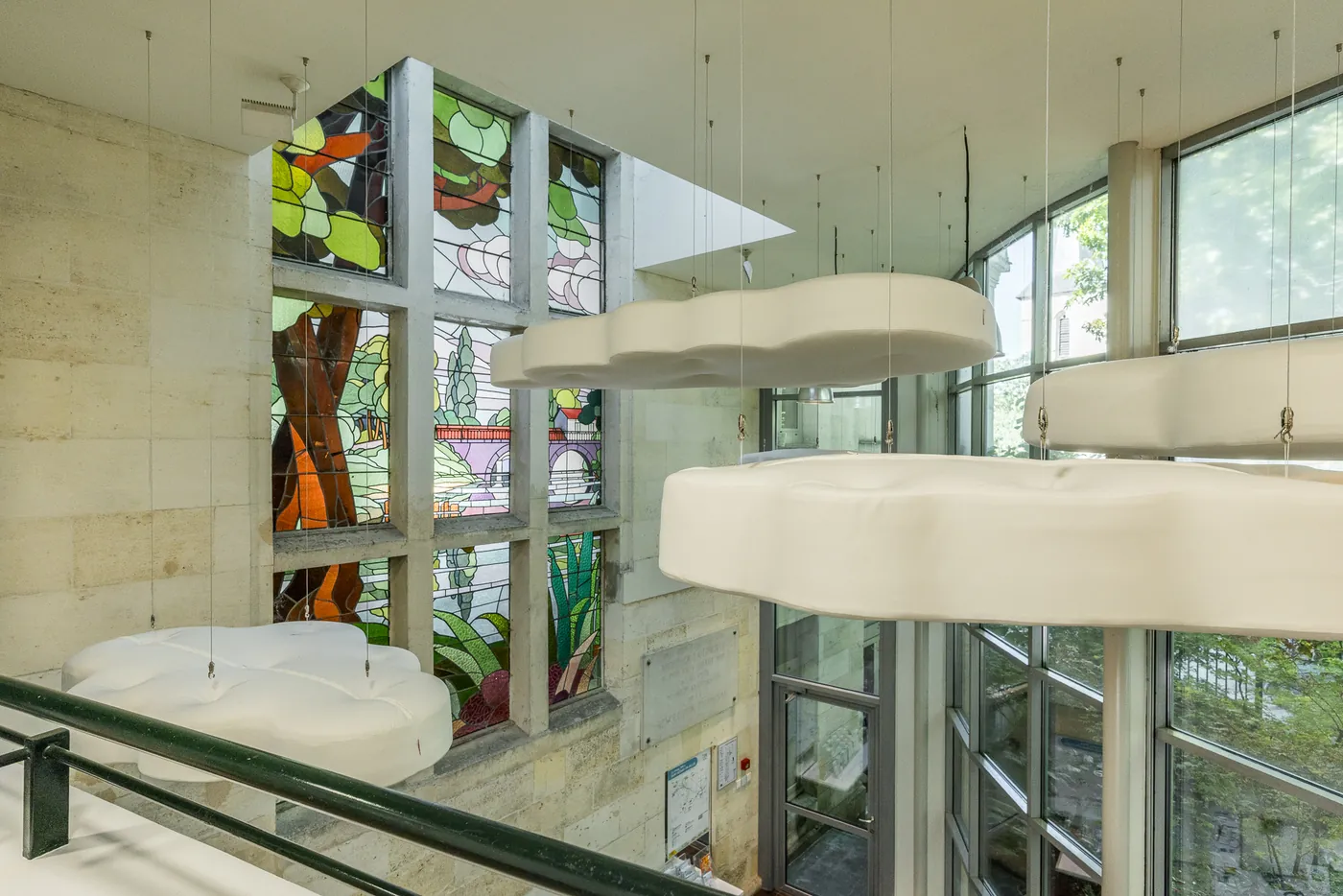
In a hall with too much reverberation, one user in three has to ask the agent who informs them to repeat it. It's not a comfort problem, it's a reception problem.
Three reasons to act
Intelligibility first
Under 0,6 s of reverb, a conversation remains intelligible without the need to repeat it or hear it from the waiting room. Beyond 1 s, everyone raises their voices and the noise level in the hall rises by itself.
Staff fatigue
A receptionist experiences up to 80 dB continuously during busy peaks. This is a threshold at which the labor code imposes preventive action.
Enforceable thresholds
The NF standard S31-080 sets acoustic performance levels by type of space, including for public reception and waiting areas. Our before and after measurements make it possible to verify whether these thresholds have been reached.
Before, after, measured
Hall of 180 m², tiled floor, concrete ceiling. 14 hanging clouds.
Before, after
Reverberation time according to the Sabine model. Results vary with volume, materials and use; validated on site by before / after measurement.
What French regulations require
- Hall, circulation (NF S31-080)
- TR compliant with the targeted level (Current/Performant/Very efficient)
- Reception, public waiting room
- Absorption area ≥ 25 % of floor area
- Meeting room / collective office
- TR ≈ 0,5 to 0,6 s
- Normative reference
- NF S31-080
Comparable
spaces
Every project starts with a measurement and ends with another.
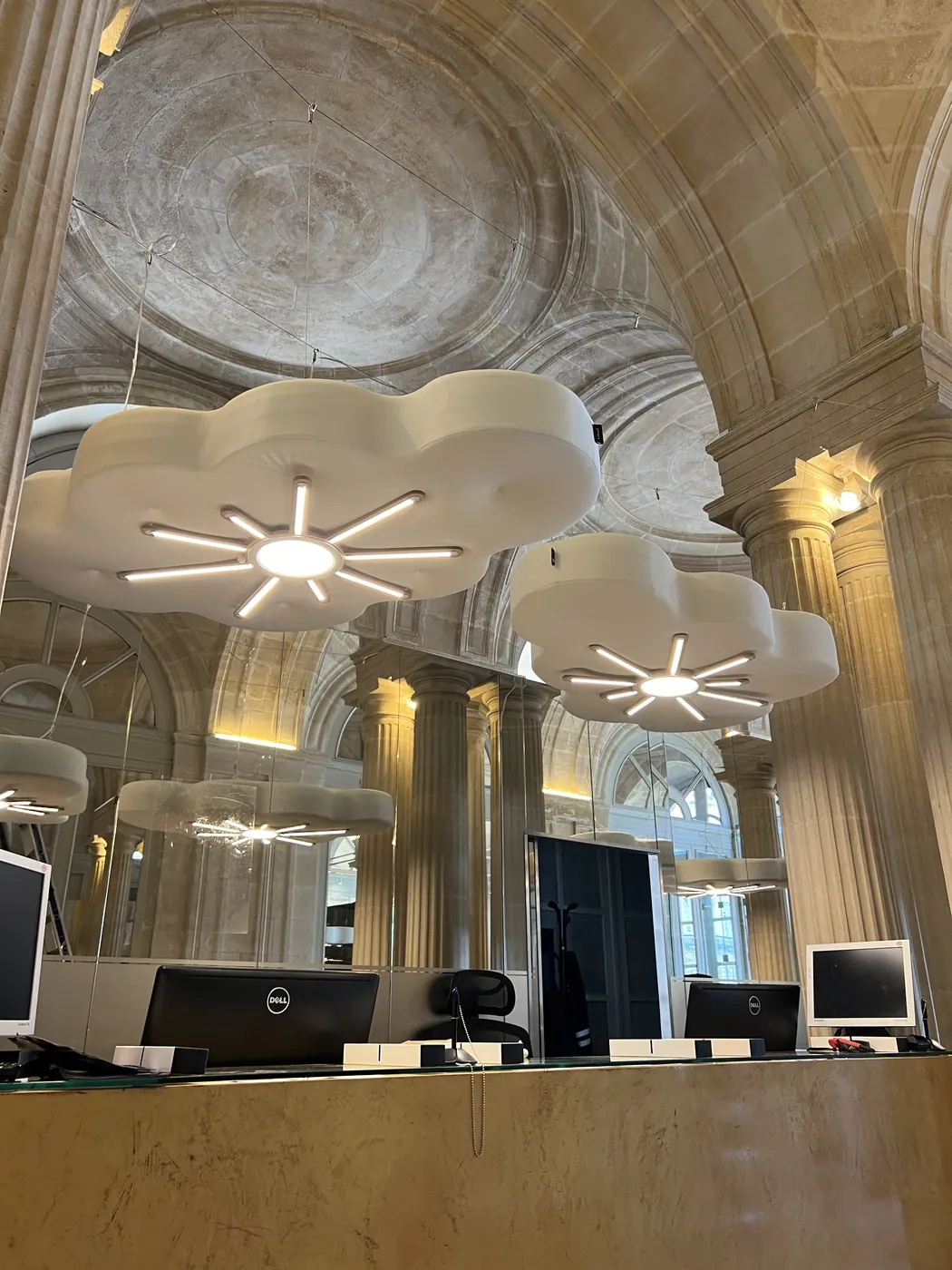
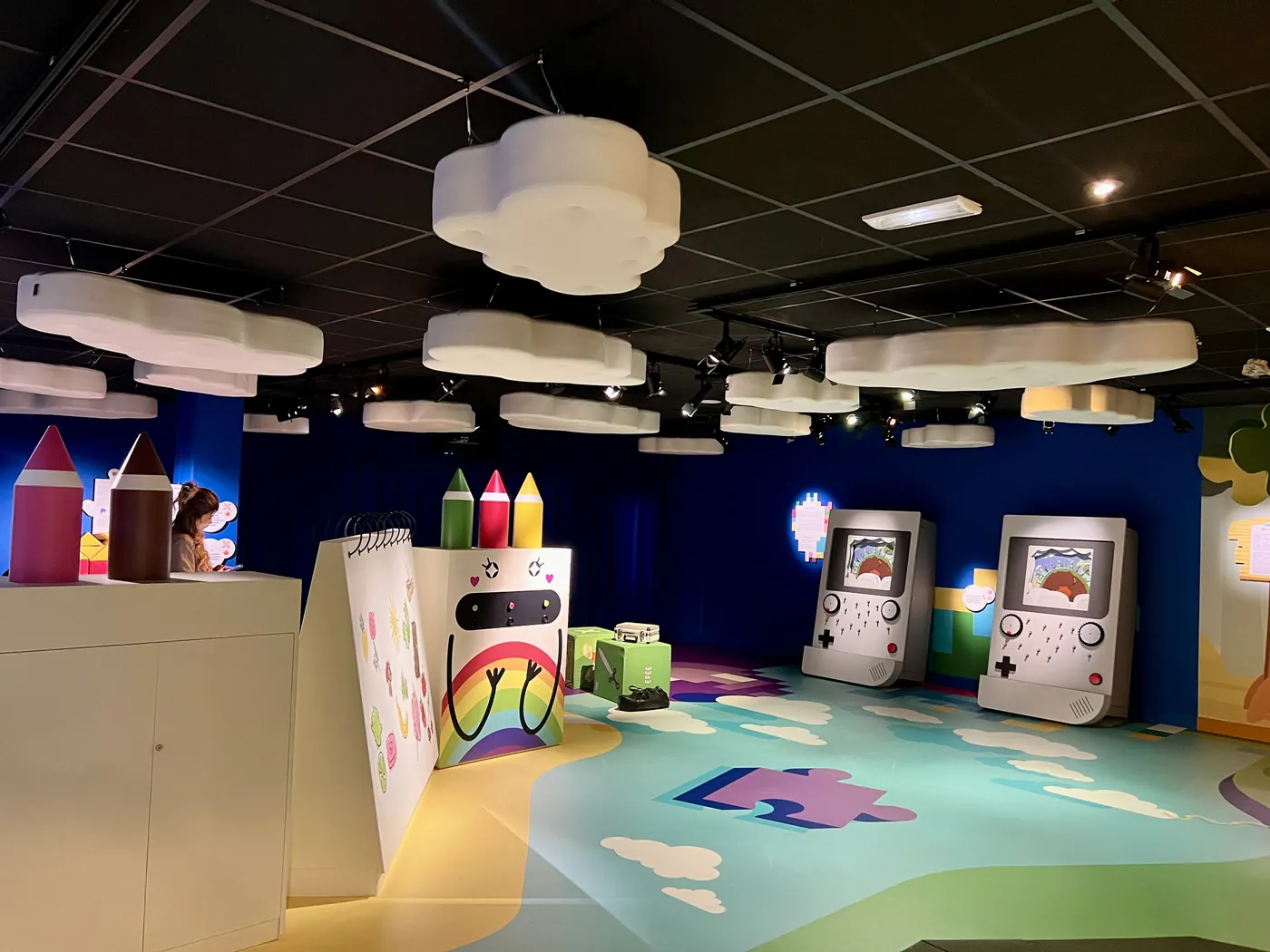
A building that needs treatment?
We measure on site, size the installation to meet the regulatory threshold, and come back to measure after installation.
Request an acoustic survey